
Antrim Parole and Probation
Parole and probation can both place a person under the Michigan Department of Corrections Field Operations Administration, yet they do not prove the same history. Parole follows an MDOC prison term. Physical release begins the community phase, and MDOC remains responsible until discharge or another lawful end to supervision. Probation comes from a court sentence. It may follow a jail stay, but it can also begin without any prison term. An Antrim County Correctional Facility departure on bond or after time served does not by itself show either status.
The public starting point is MDOC's Offender Tracking Information System, known as OTIS. It includes MDOC prisoners, parolees, probationers, absconders, and people discharged within the system's stated public window. OTIS does not import jail-only Antrim County bookings. A person who left the local jail but never entered MDOC jurisdiction may instead need to be traced through the sheriff release record and court disposition described in the Antrim County released inmate search.
| Point | Parole | Probation |
|---|---|---|
| How it begins | Release from MDOC prison into community supervision | A court orders supervision as part of a sentence |
| Prior prison term | Yes, for the parole status at issue | Not required |
| OTIS filter | Parolees or Parole Absconders | Probationers or Probation Absconders |
| Useful profile fields | Date Paroled, Assigned Location, supervision dates | Current Status, Assigned Location, supervision dates |
| Completion | MDOC discharge, not merely release from prison | Completion or lawful termination of the court-ordered term |
These terms matter when reading a record. A parolee is out of prison, but not out of MDOC jurisdiction. A probationer may have been in the community from the start. Discharge is the stronger completion term. It means MDOC jurisdiction has ended, while a future supervision discharge date remains a planned date and not proof that supervision is over.
Verify Antrim Post-Release Supervision
Use a positive identifier and a positive status. A name-only result can point to the wrong person, and a no-result is weak proof because names, database scope, set-aside records, and retention rules can affect the search. OTIS permits a search by offender number or surname, with first name, age, sex, race, marks, scars, or tattoos available to narrow the results.
- Open OTIS and enter the MDOC offender number when known. Otherwise, enter the last name and add other facts only to separate likely matches.
- Search the Parolees filter for someone physically released from prison. Search Probationers for a court-supervised person who may not have served prison time.
- When contact has stopped or a violation status is suspected, check the separate Parole Absconders and Probation Absconders filters. Do not treat either status as discharge.
- Open the profile. Match the MDOC number, age or date of birth, offense, county, court file, and sentence before relying on the status.
- Read Current Status, Date Paroled, Supervision Begin Date, Assigned Location, and Supervision Discharge Date in context. A future date is prospective.
- Use the assigned location and the MDOC office directory to identify the field office. Contact that office if a public field is unclear or appears wrong.
The official OTIS search displays the fields and status filters used in this process.
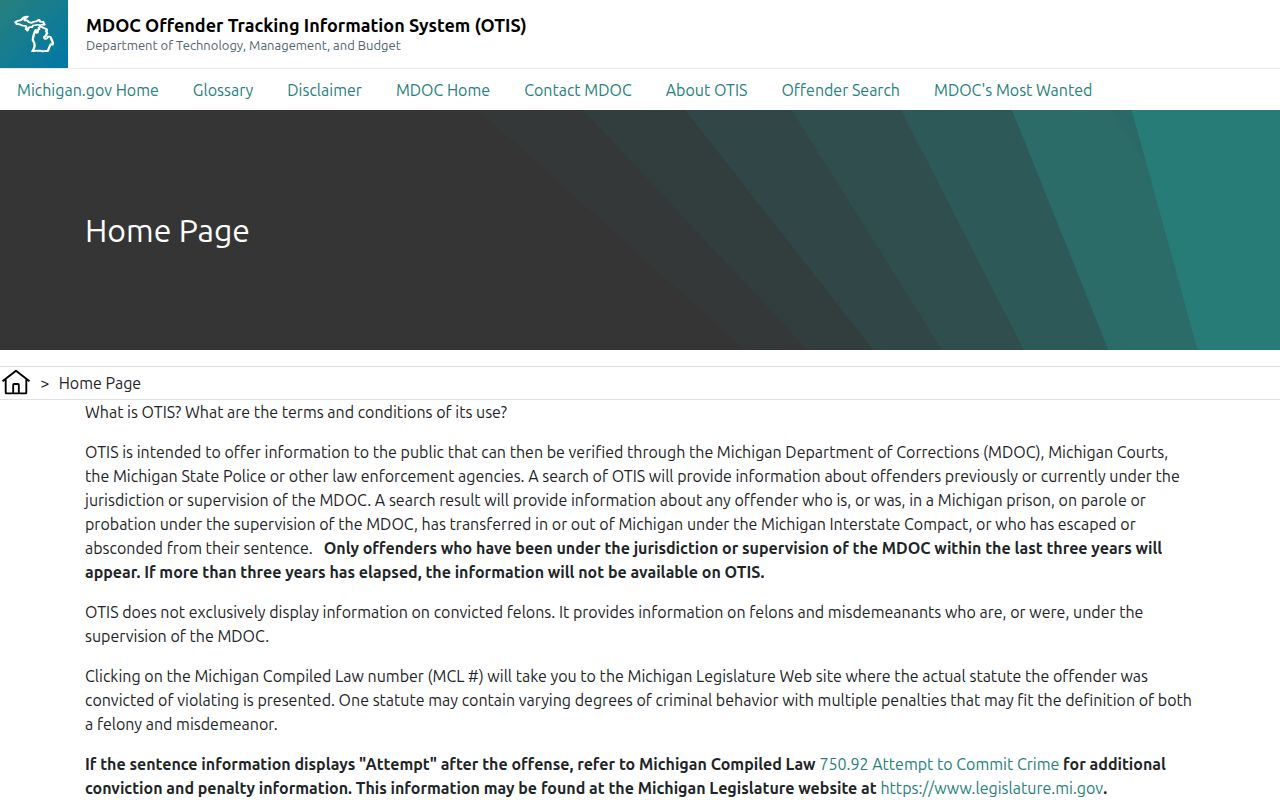
The screen shows why the correct filter is part of the evidence: parole, probation, discharge, and absconder status are separate search categories.
Note: OTIS covers MDOC jurisdiction, not a jail-only bond, dismissal, time-served release, or short local sentence.
Antrim Supervision Office Verification
The local verification point is the Antrim County Parole/Probation Office in Bellaire. It belongs to MDOC's Region 2 field-office structure. Use it after OTIS shows parole, probation, or a Bellaire assigned location. The office can address a reporting-office question or help route a possible status error. It does not own the Antrim County jail release log and is not the office for confirming a jail-only bond or time-served departure.
Antrim County Parole/Probation Office
107 E. Cayuga St.
P.O. Box 386
Bellaire, MI 49615
Phone: 231-533-5136
The official Region 2 directory supplies the Bellaire office listing shown below.
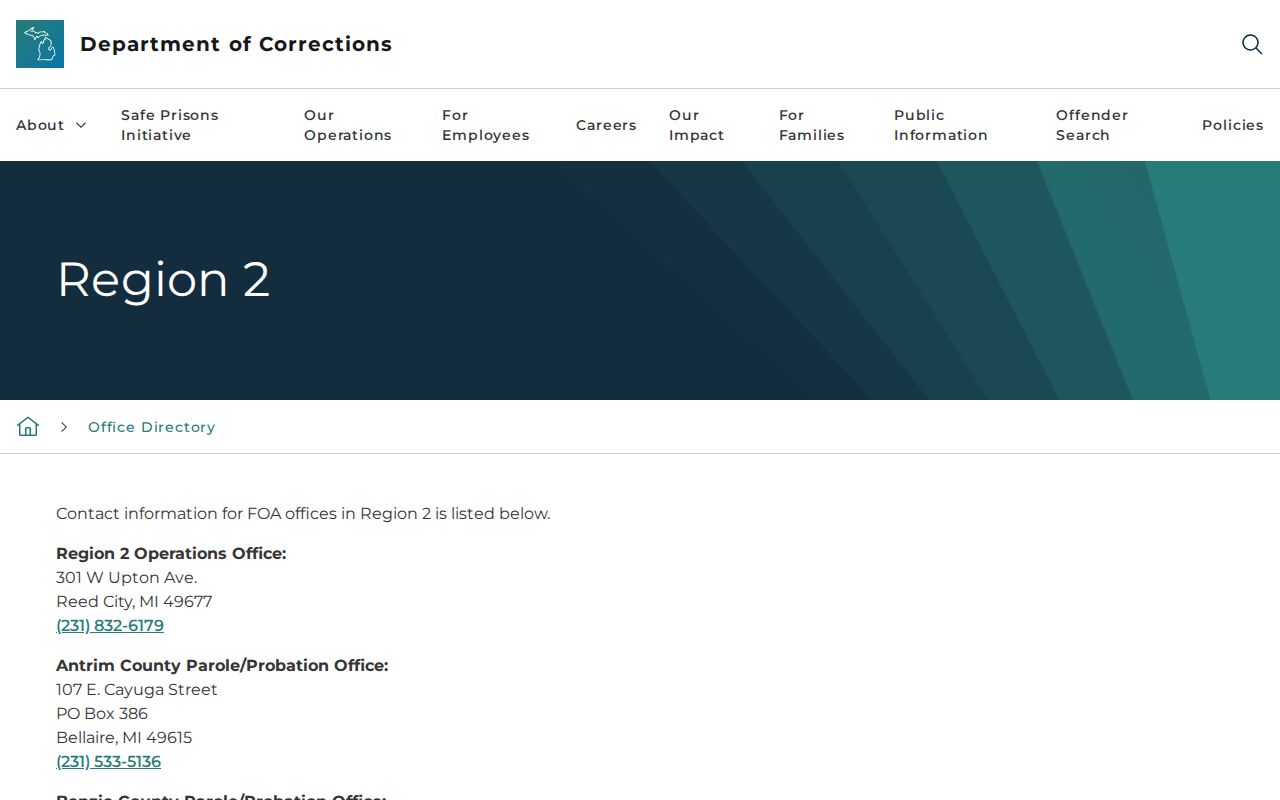
This local listing supports a two-stage check: establish the public MDOC status in OTIS, then ask the assigned office about an unclear location or supervision field.
Antrim Assigned Location Means
OTIS's Assigned Location is the practical bridge from a statewide record to local supervision. It identifies the office or placement tied to the public MDOC profile. A Bellaire assignment can direct a caller to the Antrim office. Another location may mean supervision is handled elsewhere, even if the sentence or earlier jail event involved Antrim County.
Location is not the same as release status. First read Current Status. Then compare Date Paroled, the supervision dates, and the sentence block. A person can be physically out of prison and assigned to a field office while still under parole. Likewise, an absconder may have an assigned office and remain under legal supervision despite an alleged loss of contact. The field office, not guesswork from an address line, is the right source for correcting a supervision record.
When the assigned office cannot be resolved from the directory, MDOC Field Operations Administration lists a main contact at 517-335-1979 and mdoc-foa-admin-public@michigan.gov. Give the MDOC number and describe the exact public field at issue. Do not ask that office for an Antrim jail release timestamp. Keeping the state and county requests separate helps each custodian find the record it owns.
- Parole
- Community supervision after physical release from an MDOC prison term.
- Probation
- Court-ordered community supervision that does not require a prior prison term.
- Absconder
- A person still subject to supervision who is alleged to have stopped complying or maintaining contact.
- Discharge
- Completion of MDOC jurisdiction, distinct from release from prison on parole.
Note: A future supervision discharge date describes an expected endpoint and does not establish that MDOC oversight already ended.
Antrim Absconder Status Checks
OTIS exposes separate Parole Absconders and Probation Absconders filters. An absconder result is not a release or discharge record. It states that supervision remains in force while the person is alleged to have stopped meeting contact or compliance duties. The public record should be read as a status, not as permission to locate, approach, or confront anyone.
When relevant whereabouts information exists, MDOC directs the public to local law enforcement and provides an Absconder/Escapee Tip Line at 517-755-0855. For a possible data error, use the assigned parole or probation office. A court-source mistake in the sentence or offense information may need correction by the sentencing court, while a wrong supervision or absconder field belongs with the assigned MDOC office.
MI-VINE serves a different purpose. It can offer custody notices for release, transfer, or escape when the agency and record participate. It does not replace OTIS for parole, probation, absconder, or discharge status. A person checking the initial custody event can use the Antrim County VINE inmate check, then return to OTIS and the assigned office for supervision.
Antrim Parole Decisions and Release
The Michigan Parole Board is the sole paroling authority for felony offenders committed to MDOC. MCL 791.234 establishes its jurisdiction, and the jurisdiction statute does not turn an eligibility date into a guaranteed departure. Michigan law also requires more than date eligibility before a grant. Routine consideration often starts about six months before eligibility or reconsideration, generally with an interview conducted by secure video.
A grant moves to the Parole Release Unit, which coordinates the date, term, placement, and conditions. MDOC ordinarily requires at least 28 days between the Board's release decision and physical release. Misconduct or adverse information can suspend a grant. A denial can lead to later reconsideration, while a deferred case may wait for a plan, placement, or program. For those reasons, a decision is not proof that the person left prison. OTIS Date Paroled and Parolee status are the later public checks.
Michigan does not publish a verified calendar for routine parole interviews or a person-level statewide decision lookup. The public-hearing registration page covers a narrower set of clemency and certain lifer proceedings. The state's quarterly Parole Board reports are aggregate reports and do not identify a specific person's result. Use OTIS, the formal notice, Board contact, or a focused records request when an individual outcome must be established.
The official parole consideration process documents the Board review and later release coordination.
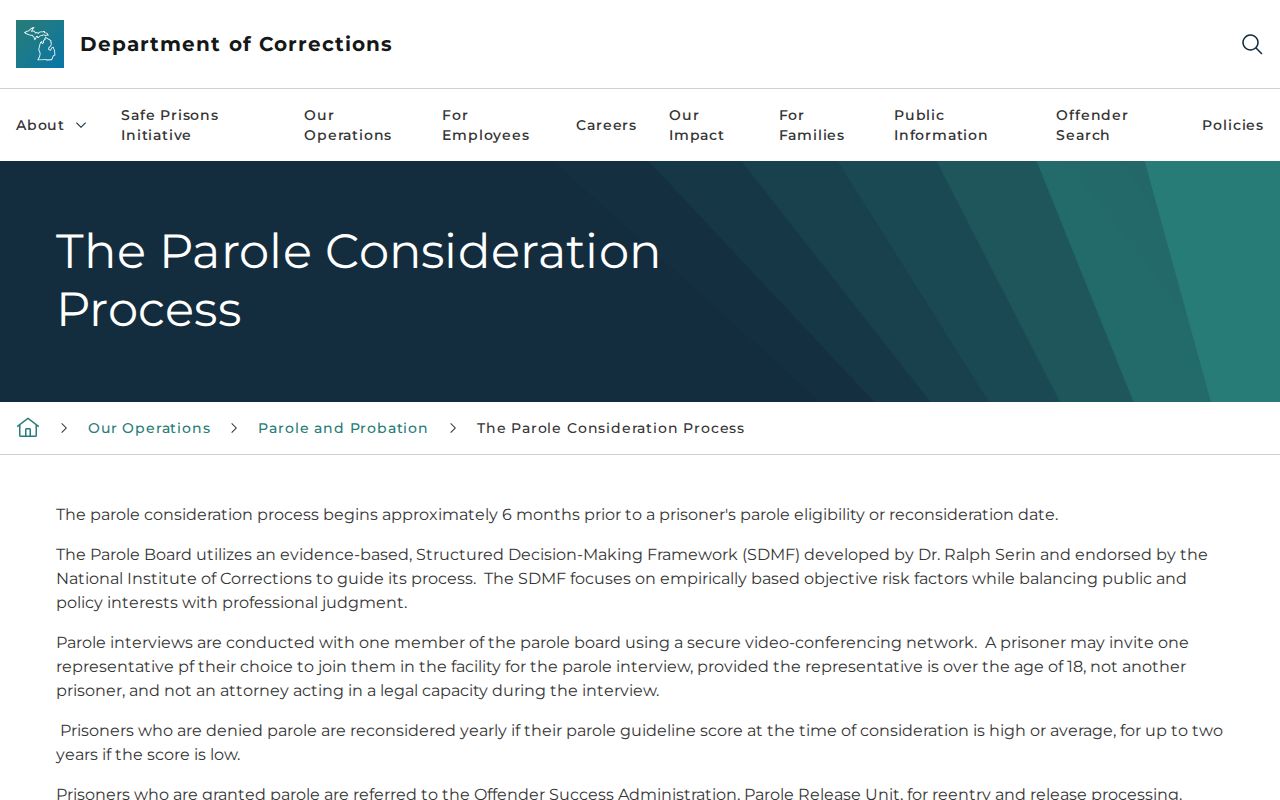
The state process explains why a Board action and the later physical release date must be verified as distinct events.
Antrim Supervision Discharge Records
Supervision ends through a completed discharge or another documented legal action, not merely because the person is no longer in prison or stops appearing under an active filter. OTIS may show a Supervision Discharge Date, but its timing controls the meaning. A future date is expected. A Current Status of Discharged is the clearer public sign that MDOC jurisdiction has ended.
OTIS retains publicly searchable discharged profiles only within three years of supervision discharge. An older no-result therefore cannot prove that no supervision once existed. MDOC describes other records channels for past prisoners, including its records-retention contact for certain records within an up-to-six-year post-release window and the MDOC FOIA process for named records such as a discharge certificate, parole order, or Basic Information Sheet.
Use the source that owns the disputed fact. The Antrim sheriff owns the county booking and release record. The sentencing court owns court-originated sentence information. MDOC owns its parole, probation, absconder, and discharge fields. That separation keeps a county jail departure from being mislabeled as state discharge and keeps a parole grant from being reported as a completed release.
A reproducible check should record the exact name, MDOC number, status filter, search date, assigned location, and source address. Classify a result as positive, negative, unavailable, or ambiguous. A server error is unavailable. A same-name profile that cannot be tied to the case is ambiguous. Those labels prevent a weak search outcome from becoming a false claim about supervision.
Note: A missing older OTIS profile may reflect the discharge retention limit or a set-aside, not an unbroken term of custody.
Public Record Search
Sponsored Results